
Mild, medium, or hot
How do you like your kimchi? Mild, medium, or hot?
I used to like it hot. Really hot. More recently, I've settled for medium. It's probably healthier.
Someday, someone will conduct a medical research study to see if the degree of spicy (hotness) contributes to the risk of stomach cancer. We don't have that data right now. It would be very difficult to get that type of data.
I used to like it hot. Really hot. More recently, I've settled for medium. It's probably healthier.
Someday, someone will conduct a medical research study to see if the degree of spicy (hotness) contributes to the risk of stomach cancer. We don't have that data right now. It would be very difficult to get that type of data.
How often do you eat kimchi?
I'm Joseph Chaiwhan Kim and I love eating kimchi. I don't eat it every day. How often do you eat it?

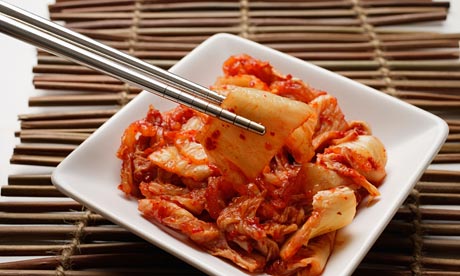
Don't eat too much kimchi. You might get cancer.
There is ongoing research about kimchi and cancer. Does kimchi cause cancer? I sure hope not, because I grew up eating kimchi all the time. Korean guys seem to get stomach cancer. Don't smoke. Don't drink alcohol. I'm going to eat my kimchi.
Kkakdugi
My favorite type of kimchi is kkakdugi 깍두기
Here's what Wikipedia has to say:
Kkakdugi is a variety of kimchi in Korean cuisine. Usually, it has all the ingredients of kimchi, but the baechu (hangul: 배추; Napa cabbage) used for kimchi is substituted with Korean white radish (called mu, 무 in Korean). Kkakdugi is a popular banchan (side dish) enjoyed by Koreans and others.
I like how kkakdugi is crunchy. Sometimes it's a bit sweet too.
I'm Joseph Chaiwhan Kim and I enjoy eating kkakdugi.
Here's what Wikipedia has to say:
Kkakdugi is a variety of kimchi in Korean cuisine. Usually, it has all the ingredients of kimchi, but the baechu (hangul: 배추; Napa cabbage) used for kimchi is substituted with Korean white radish (called mu, 무 in Korean). Kkakdugi is a popular banchan (side dish) enjoyed by Koreans and others.
I like how kkakdugi is crunchy. Sometimes it's a bit sweet too.
I'm Joseph Chaiwhan Kim and I enjoy eating kkakdugi.
Different types of kimchi and stomach cancer
Does kimchi cause stomach cancer?
There are many different types of kimchi. Let’s look at these 3 types and see how they are linked to gastric cancer:
Baiechu kimchi (prepared with salted Chinese cabbage and red pepper, etc.),
Kkakduki (a kind of kimchi prepared with salted radish and red pepper, etc.),
Dongchimi (a kind of kimchi prepared with radish and a large quantity of salt water)
To assess gastric cancer (GC) risk in relation to dietary intake in Korea, a case-control study was performed. Trained dietitians interviewed 136 patients diagnosed with GC, and the same number of controls were selected by matching sex, age and hospital. A significant decrease in GC risk was observed with increased intake of Baiechu kimchi (prepared with salted Chinese cabbage and red pepper, etc.), Baiechu kimchi-stew, garlic, mushroom and soybean milk. On the contrary, a significant increase in the risk of GC was observed with increased intake of cooked rice with bean, charcoal grilled beef, pollack soup, Kkakduki (a kind of kimchi prepared with salted radish and red pepper, etc.), Dongchimi (a kind of kimchi prepared with radish and a large quantity of salt water) and cooked spinach. In food groups, increased intake of soybean products was associated with decreased risk of GC. Intake of citrus fruits rather than total fruits was shown to have a protective effect on the risk of GC, but was not significant. In this study, intake of total vegetables was shown to have a protective effect, whereas high nitrate-containing vegetables increased the risk of GC. In conclusion, our study suggests that the risk of GC decreased with high consumption of fresh vegetables and fruits, whereas high consumption of foods rich in nitrate and carcinogenic substances produced during the cooking process increased the risk of GC.
There are many different types of kimchi. Let’s look at these 3 types and see how they are linked to gastric cancer:
Baiechu kimchi (prepared with salted Chinese cabbage and red pepper, etc.),
Kkakduki (a kind of kimchi prepared with salted radish and red pepper, etc.),
Dongchimi (a kind of kimchi prepared with radish and a large quantity of salt water)
To assess gastric cancer (GC) risk in relation to dietary intake in Korea, a case-control study was performed. Trained dietitians interviewed 136 patients diagnosed with GC, and the same number of controls were selected by matching sex, age and hospital. A significant decrease in GC risk was observed with increased intake of Baiechu kimchi (prepared with salted Chinese cabbage and red pepper, etc.), Baiechu kimchi-stew, garlic, mushroom and soybean milk. On the contrary, a significant increase in the risk of GC was observed with increased intake of cooked rice with bean, charcoal grilled beef, pollack soup, Kkakduki (a kind of kimchi prepared with salted radish and red pepper, etc.), Dongchimi (a kind of kimchi prepared with radish and a large quantity of salt water) and cooked spinach. In food groups, increased intake of soybean products was associated with decreased risk of GC. Intake of citrus fruits rather than total fruits was shown to have a protective effect on the risk of GC, but was not significant. In this study, intake of total vegetables was shown to have a protective effect, whereas high nitrate-containing vegetables increased the risk of GC. In conclusion, our study suggests that the risk of GC decreased with high consumption of fresh vegetables and fruits, whereas high consumption of foods rich in nitrate and carcinogenic substances produced during the cooking process increased the risk of GC.
Subscribe to:
Posts (Atom)